San Francisco Whale Watching: Seasons, Boats and the Honest Odds Offshore
Two very different whale trips leave this coast, one calm and one rough, and the season decides which whale you are actually chasing.
Short answer
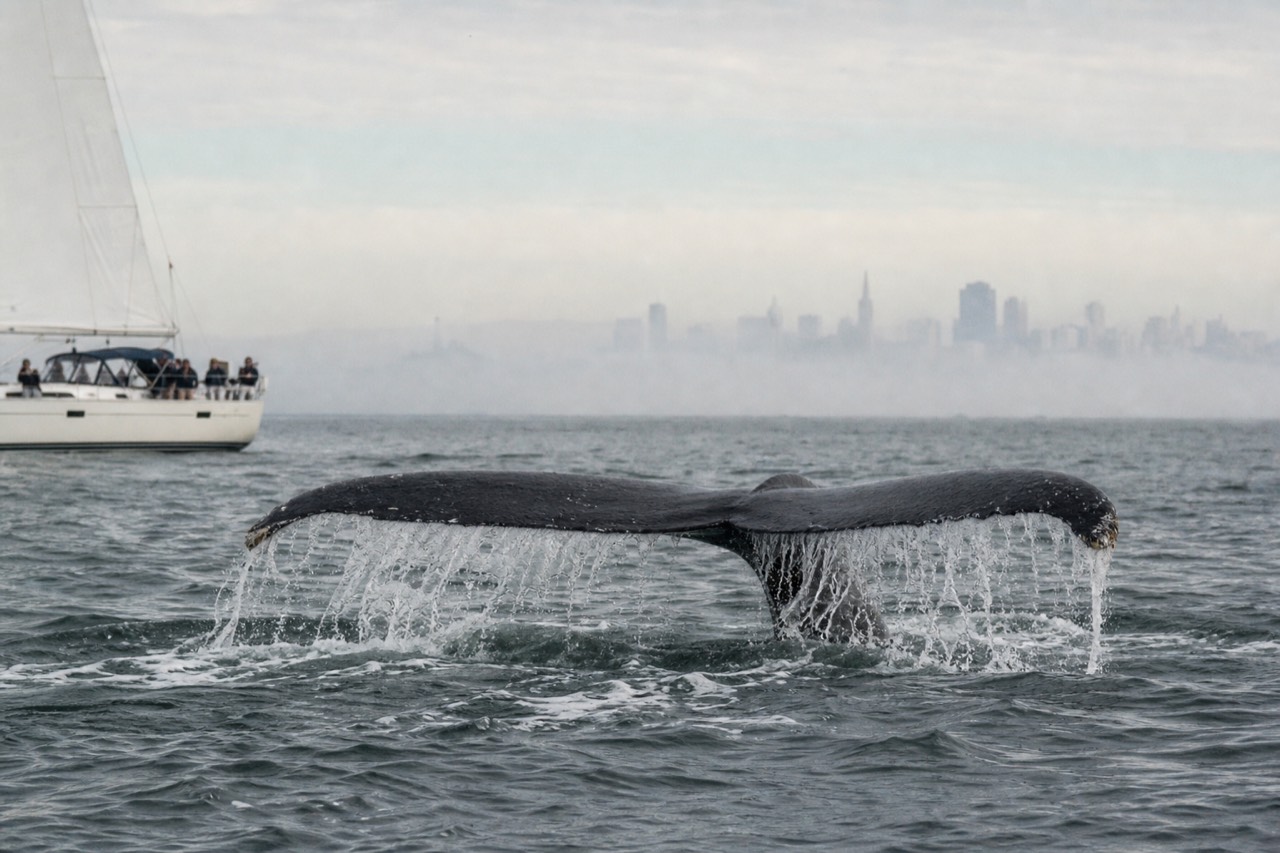
Whale watching off San Francisco runs year-round, with the whale changing by season: gray whales roughly December to April, humpback and blue whales roughly May to November. Short coastal eco trips run from $76 and the Red & White naturalist cruise from $75. The long offshore Farallones run is rougher and mostly operator-direct. Check the current price and season before you book.
The blow gives it away first. A grey puff of mist hangs above the swell a few hundred yards off the bow, the boat eases its engine, and everyone crowds the rail before the naturalist has even finished the sentence. That is the whole promise of a whale trip out of San Francisco: not a guaranteed animal, but a stretch of cold, wild water where the biggest creatures on Earth come to feed, and a captain who knows where to look.
Search "San Francisco whale watching" and the listings blur together, which hides the one thing you actually need to sort out before booking. There is a short, calmer trip that mostly works the coast and the mouth of the bay, and there is a long, genuinely rough run out to the Farallon Islands. They see different whales, they cost different money, and they demand different stomachs. This site, San Francisco Bay Cruises, lays the real, bookable options side by side so you pick the boat that matches the day you can handle.
What whales can you see off San Francisco, and when?
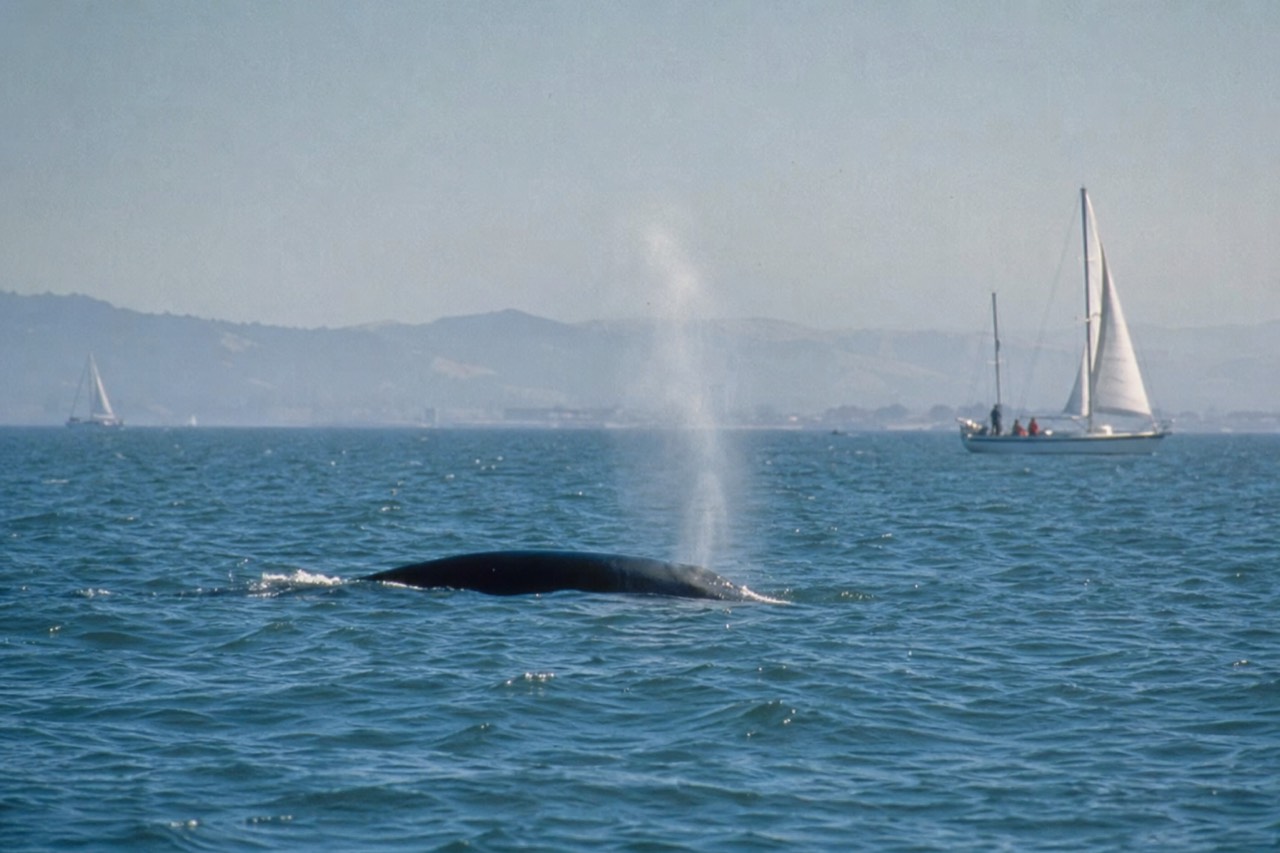
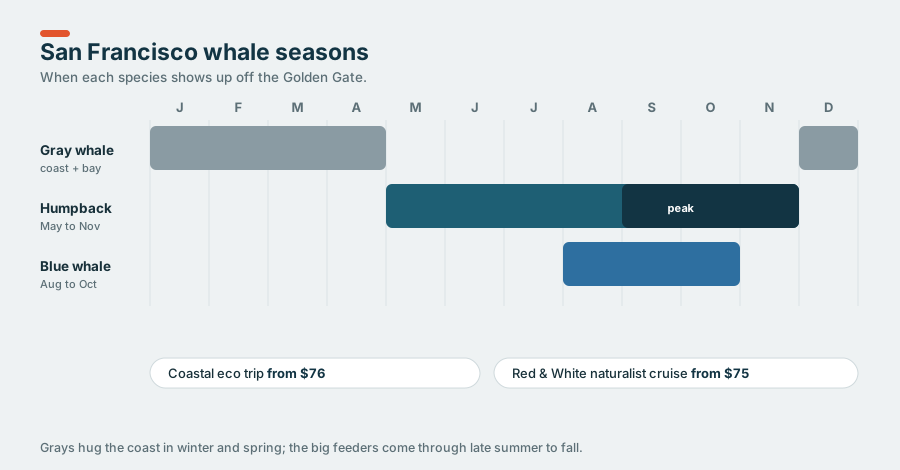
Three big whales pass this coast on their own schedules. Gray whales migrate along the shore roughly December through April. Humpback and blue whales feed on the offshore banks roughly May through November, peaking in late summer and fall. You may also see harbor porpoises, dolphins, sea lions and the occasional orca. The whale you get depends far more on the month than on the operator.
The waters off the city sit inside the Greater Farallones National Marine Sanctuary, one of the richest feeding grounds on the West Coast, where cold upwelling drives a food chain that pulls whales in close. Gray whales are the winter and early-spring animal, tracking the coast between their breeding lagoons and Arctic feeding grounds. Humpbacks and blues arrive as the water warms and the krill blooms, and they linger into November. Blue whales, the largest animal that has ever lived, show up mainly from late summer into fall.
Because the season, not the boat, decides the whale, the smartest first move is to match your travel dates to the animal you most want to see, then pick the trip. The three products below cover the calm coastal eco trip, the Red & White naturalist cruise, and a wind-powered sail for anyone who would rather stay in the sheltered bay than commit to open ocean.
When is San Francisco whale-watching season, month by month?
There is no dead month, only a changing cast. December to April is gray-whale season along the coast. May to November is humpback and blue-whale season on the offshore feeding grounds, with the strongest sightings from roughly July into November. Early fall doubles as the clearest, calmest weather window, which makes September and October the sweet spot for both whales and comfort.
The seasons overlap at the edges, and recent years have blurred them further, with gray whales increasingly entering the bay itself rather than staying out along the coast. Naturalists sort the calendar the way the National Oceanic and Atmospheric Administration does for the Greater Farallones sanctuary: grays in the cooler months, humpbacks and blues in the warmer ones. The National Park Service tracks the same gray-whale migration from the headland at Point Reyes whale watching, just up the coast, where the southbound push peaks around December to February and the northbound return runs March through May.
| Whale | Rough window | Peak months | Where it feeds or passes |
|---|---|---|---|
| Gray whale | December to April | December to February (south), March to May (north) | Close along the coast, increasingly into the bay |
| Humpback whale | May to November | July to November | Offshore banks near the Farallones |
| Blue whale | May to November | August to October | Deep water off the continental shelf |
| Harbor porpoise / dolphins | Year-round | Year-round | The Golden Gate channel and inner bay |
Weather stacks neatly on top of that. Summer, roughly June through August, brings the heavy marine-layer fog that hides the bridge and chills an open deck, while the water off the Gate stays lumpy. September and October clear up, warm slightly and calm down, so an early-fall trip lands you in humpback and blue season on the year's most cooperative water. The month scorecard below is the quick read.
| Month | Main whale in play | Sea and weather | Verdict |
|---|---|---|---|
| December to February | Gray whale (southbound) | Cool, some crisp clear days, winter swell | Good for grays, dress warm |
| March to May | Gray whale (northbound), humpbacks arriving | Variable, building spring wind | Shoulder season, mixed odds |
| June to August | Humpback, blue whale building | Foggy mornings, choppy off the Gate | Whales yes, comfort no |
| September to October | Humpback and blue whale peak | Clearest, warmest, calmest | The all-round best window |
| November | Humpback and blue whale tailing off | Cooler, clearer than summer | Strong late-season odds |
Inner-bay eco trip or the offshore Farallones run?
These are two different days on the water. A coastal eco trip runs a few hours from the wharf, works the mouth of the bay and just outside the Golden Gate, and stays calmer and family-friendlier. The offshore Farallones run is a long haul, often all day, roughly 27 miles out to a protected island group with no public landing, and it can be genuinely rough. The offshore trip sees more open-ocean whales; the eco trip trades some odds for comfort.
The short version most visitors want is the naturalist-led wildlife eco tour that leaves Pier 39. It runs about two and a half to four hours depending on where the wildlife is, often slipping under the Golden Gate into the near Pacific before turning back, and it carries a naturalist who narrates the sightings. Because it stays close, it fits a morning rather than a whole day, and it forgives a shaky stomach far better than the long offshore option. When your dates are set, you can check the season's departures and the live price on the operator's page; the reviews and the rating are shown on the listing.
The offshore Farallones run is a different commitment. The islands sit about 27 miles out in the sanctuary, closed to the public, and reaching them means hours of open-ocean transit each way on water that regularly turns to a hard, cold chop. The payoff is real: this is where the humpbacks and blues feed, and where an April 2026 expedition even logged a pod of Baird's beaked whales, a species the operator had not recorded in more than thirty years. But be honest with yourself about motion. If you know you get seasick, the offshore run is not the place to test it, and even the shorter eco trip can pitch once it passes the Gate. The company that runs the eco tour also operates day cruises into the Farallones sanctuary, though its full-day offshore excursion has shown as not currently bookable on the booking platform; other Farallones expeditions run operator-direct only.
| Factor | Coastal eco trip | Offshore Farallones run |
|---|---|---|
| Route | Coast and the mouth of the bay, sometimes just outside the Gate | ~27 miles out to the island sanctuary and back |
| Typical length | 2.5 to 4 hours | Often all day, around 8 hours |
| Sea state | Manageable inshore, lumpy past the Gate | Full open-ocean swell, frequently rough |
| Seasickness risk | Lower, family-friendlier | High, medication strongly advised |
| Whales targeted | Grays inshore, humpbacks near the Gate | Humpbacks and blues on the feeding grounds |
| Booking | On the listing, from $76 | Operator-direct only, from around $320 |
| Best for | Most visitors, and anyone unsure of their stomach | Committed wildlife watchers on a calm day |
How much does whale watching off San Francisco cost?
A short coastal whale trip starts at $76 for the naturalist-led eco tour and $75 for the Red & White naturalist cruise, both a fraction of the day. The long offshore Farallones expeditions run far higher, starting around $320 for a full eight-hour trip, and those are booked directly with the operator rather than on a booking platform. Kids and seasonal sales move the numbers, so always check the current price.
Price tracks time on the water and how far out the boat goes. The two coastal trips are the value plays: a few hours, a naturalist aboard, and a route that works the productive water near the Gate without committing your whole day. The offshore run costs more because it burns fuel and crew hours reaching the sanctuary and back, and because those trips carry fewer passengers. That offshore figure is context, not one of our bookable cruises; treat it as the going rate for a full-day expedition, not a price you can add to cart here.
| Trip | Operator | Length | From price (adult) | Booking |
|---|---|---|---|---|
| Wildlife eco tour | San Francisco Whale Tours | 2.5 to 4 hr | $76 (check the current price) | On the listing |
| Whales of the Bay cruise | Red & White Fleet | 2.5 hr | $75 (check the current price) | On the listing |
| Full-day Farallones expedition | Operator-direct only | ~8 hr | around $320 | Direct with the operator |
For most travelers the coastal trip is the right call on both money and comfort, and the two listed options are close enough in price that the deciding factor is the schedule. If cost across every kind of trip on the water is what you are weighing, our full breakdown of what a bay cruise really costs puts whale trips next to the cheaper sightseeing hours.
Where do the whale boats leave, and how do you book?
Coastal whale trips leave from the Fisherman's Wharf area: the naturalist eco tour departs Pier 39, and the Red & White Whales of the Bay cruise leaves Pier 43½. The Red & White naturalist cruise runs a fixed 2.5-hour trip on Saturdays at 9:30am from roughly April into October. Book a week or two ahead in peak season, arrive 20 to 30 minutes early, and dress far warmer than the city itself feels.
Getting the pier right matters, because the docks sit close together and only some run whale trips. The Red & White Whales of the Bay cruise sails from Pier 43½ with a live naturalist aboard, targeting grays, humpbacks and blues plus the resident sea lions and seabirds, and it is rated 4.7 across 31 reviews. Its Saturday-morning schedule is tight, so a date that lines up is worth grabbing; you can see the Saturday sailings and the live price on the operator's page.
The eco tour leaves from Pier 39 and runs a longer, more flexible window through the year, chasing whatever the wildlife is doing that week. Whichever you choose, layer up: an open deck off the Gate is cold and wet even on a warm city afternoon, and the wind west of Alcatraz cuts straight through a light jacket. Bring a hat, sunglasses against the glare, and motion-sickness tablets taken before you board if you are unsure. For the wider picture of what leaves the wharf, our Pier 39 and Fisherman's Wharf departure guide maps every dock.
| Pier | Whale trip | What else leaves here |
|---|---|---|
| Pier 39 | Wildlife eco tour, naturalist-led | Blue & Gold bay cruises, RocketBoat, catamaran sails |
| Pier 43½ | Whales of the Bay (Sat 9:30am, Apr to Oct) | Red & White sightseeing cruises |
| SF Marina Yacht Harbor | Full-day offshore expeditions (operator-direct) | Not a sightseeing-cruise dock |
What are your real odds, and how rough does it get?
Sightings are strong in season but never promised. Coastal humpback encounters have been close and frequent through recent summers, and full-day Farallones expeditions have logged very high historical sighting rates, but a whale is a wild animal, not a scheduled act. Comfort is the honest variable: inner-bay water is manageable, the swell past the Gate can turn a stomach, and the offshore run is rough enough that seasickness is common.
The good news for the coastal trips is that the whales have been cooperating. Through the summer of 2026, boats reported humpbacks just beyond the Golden Gate, some approaching within a boat's length, and sightings roughly a mile out during regular cruises. Offshore, the long expeditions cite historical sighting rates around 96% across their April-to-November season, which is about as close to a sure thing as wild wildlife gets, though it still is not a guarantee. Match your month to the whale, keep your expectations honest, and treat any sighting as the bonus it is.
Rough is the word to respect. The stretch of ocean just outside the Gate takes the full Pacific swell, and it does not care that the city behind you looks calm. Boats run under Coast Guard rules with credentialed captains and life jackets aboard, and operators follow the sanctuary's approach guidelines that keep vessels a respectful distance from the animals. If the sea is genuinely unsafe a trip is cancelled, and most listings cancel free up to 24 hours before, so a weather call is care rather than lost money.
A little preparation turns a cold, queasy morning into a good one. The open deck runs far colder and wetter than the city feels, the glare off the water is fierce even under cloud, and motion builds once you pass the Gate, so pack for the ocean rather than the sidewalk.
| Bring | Why it matters |
|---|---|
| Warm layers and a windproof shell | The deck off the Gate is cold and wet even on a warm city day |
| Motion-sickness tablets, taken before boarding | The swell past the Gate builds fast; medication works best early |
| Sunglasses and sunscreen | Glare off the water is strong even under overcast skies |
| A hat that will not blow off | The wind west of Alcatraz cuts hard and steady |
| Binoculars and a zoom lens | Whales often surface at a distance; close approaches are the exception |
| Water and a small snack | Trips run two and a half hours or more with no galley on the coastal boats |
If the open-ocean pitch is a dealbreaker but you still want time on the water, a sheltered sail inside the bay is the calmer trade. The wind-powered bay sailing cruise stays in protected water, leans on the breeze rather than a diesel engine, and is rated 4.9 across 660 reviews at $65, so you get the bay and the wildlife of the inner channel without the offshore beating. When a calm sail suits you better, you can check the sailing times and the live price on its listing.
Which whale-watching trip should you book?
Pick by month and by stomach. For gray whales, book December to April; for humpbacks and blues, book May to November, ideally September or October when the fog lifts. Choose the coastal eco trip or the Red & White naturalist cruise for a calmer few hours, and reserve the long offshore Farallones run only if you are confident on open water. When comfort matters most, a sheltered inner-bay sail is the gentle alternative.
There is no single best whale trip here, only the one that fits your date and your tolerance for swell. The two coastal options cover most visitors well, the offshore expedition rewards the committed, and a bay sail is the fallback for anyone who wants the water without the ocean. Whichever you lean toward, the three below are the shortlist to compare before you commit.
Frequently asked questions
What is the best month for whale watching in San Francisco?
September and October are the all-round best, landing in humpback and blue-whale season on the year's clearest, calmest water once the summer fog has lifted. For gray whales, aim for December through April instead. There is no truly dead month here, but early fall pairs peak feeding activity with the most comfortable conditions on deck.
Can you see whales from a regular San Francisco bay cruise?
Sometimes, but it is a bonus, not the plan. Gray whales increasingly enter the bay, so a sightseeing loop can get lucky, especially in winter and spring. For real odds you want a dedicated whale trip with a naturalist working the coast and the mouth of the bay, since those boats go where the whales feed rather than sticking to the landmark route.
How long is a whale-watching trip from San Francisco?
The coastal naturalist eco tour runs about two and a half to four hours from Pier 39, and the Red & White Whales of the Bay cruise is a fixed 2.5 hours from Pier 43½. The full-day offshore Farallones expedition is a much bigger commitment at roughly eight hours, most of it open-ocean transit each way.
Is whale watching off San Francisco rough?
It can be. Inner-bay water is manageable, but the swell just outside the Golden Gate turns a stomach quickly, and the long offshore run to the Farallones is genuinely rough. If you get seasick, take medication before boarding, pick a calmer coastal trip over the offshore expedition, and favor the calmer early-fall weeks.
Do you need to book whale watching in advance?
In peak season, yes. The Red & White cruise runs only on Saturday mornings from roughly April to October, so dates are limited and worth grabbing early. The eco tour has more flexibility but still fills on summer and fall weekends. Most listings cancel free up to 24 hours before, so holding a date early costs nothing if plans change.
How much does whale watching cost in San Francisco?
Short coastal trips start at $76 for the naturalist eco tour and $75 for the Red & White cruise, with the current price on each listing. The full-day offshore Farallones expedition runs far higher, starting around $320, and is booked directly with the operator rather than on a booking platform. Check the live price, since seasonal sales move the figures.
San Francisco: Whales of the Bay Cruise
Whale trips run to the season, not the walk-up window. Check the naturalist cruise's dates for your month before you promise anyone a breaching humpback.
2 hours · English commentary or crew · Pier 43½, Fisherman's Wharf
Check travel dates with the booking platform below.
None of these trips matches that choice. Adjust your preference or reset to the general recommendation.
Match Your Trip And Compare Costs
- Short naturalist trip, calmer water
- About two hours from Pier 43½, inside weather, naturalist on board. 2 hours · Pier 43½, Fisherman's Wharf. Check the cancellation window on the booking page before you commit.
- Half-day whale watching from the Wharf
- Two and a half hours toward the Gate and outside, $75. 2.5 hours · Pier 43½, Fisherman's Wharf. Free cancellation up to 24 hours before departure (listing terms). Whale sightings are wild animals and never guaranteed; the boat runs to the Farallones feeding grounds where seas can be rough.
- The island instead of the whales
- 90 minutes around Alcatraz when the sea state says stay inside. 90 minutes · Pier 39, Fisherman's Wharf. Check the cancellation window on the booking page before you commit.
Before booking
Check the cancellation window on the booking page before you commit.
Compare complete party totals in the same currency, counting everything the day would otherwise cost.