Angel Island Ferry: Fares, Schedules and How a Bay Sail Pairs With It
The island in the middle of the bay is a ferry ride to land on and a cruise highlight to sail past, and the two trips answer different plans.
Short answer
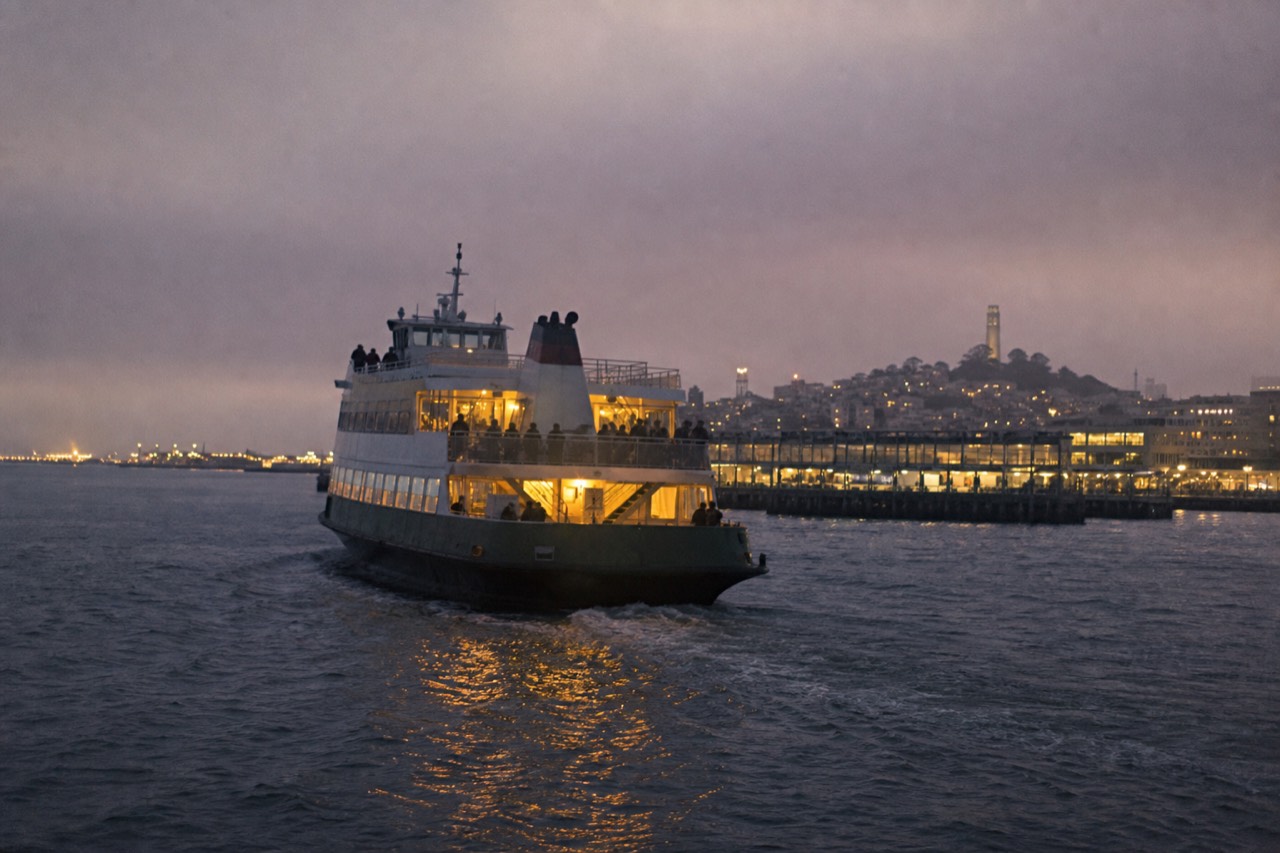
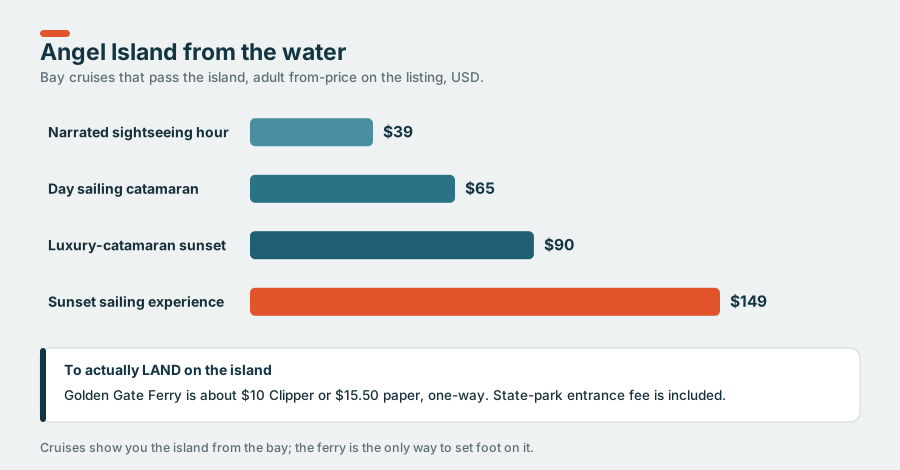
Two ferries land on Angel Island: the Golden Gate Ferry from the San Francisco Ferry Building and the Tiburon to Angel Island ferry from Marin. Golden Gate Ferry fares start around $10 with Clipper or $15.50 paper one-way, the state park fee included, crossing about 30 minutes. Sightseeing and sailing cruises pass the island from the water without landing, from $39, so take the ferry to explore and a cruise to see it.
The biggest island in the bay is also the least understood. Alcatraz gets the fame and the crowds, yet Angel Island is more than five times its size, greener, quieter, and open to walk, cycle and picnic across all day. It sits due north of Alcatraz off the Tiburon shore, a state park with old immigration barracks, a perimeter road built for feet and bikes, and a summit that looks straight down the throat of the Golden Gate. Getting there is a ferry, not a cruise, and knowing which boat does what saves a wasted trip to the wrong pier.
That is the split this guide sorts out. A ferry is the boat that lands you on the island so you can hike and explore; a bay cruise or a sail is the boat that shows you the island, the bridge and the skyline from the water without stopping. Both are worth doing, for different reasons, and the mistake is booking one when you wanted the other. Here are the real ferry fares and times, what the island holds once you land, and how a sail on the bay fits alongside a day ashore.
How do you get to Angel Island?
Two ferries land on Angel Island. The Golden Gate Ferry runs from the San Francisco Ferry Building, and the Tiburon to Angel Island ferry runs the short hop from Marin. Both include the state park entrance fee in the fare and both take round trips, since nothing is sold on the island. Sightseeing bay cruises pass the island from the water but do not stop, so the ferry is the only way ashore.
Start with the boat that matches the plan. If the goal is to set foot on Angel Island, walk the loop road, tour the Immigration Station or ride the tram, you need a ferry, and there are two. From the city side, the Golden Gate Ferry leaves the Ferry Building on the Embarcadero and crosses in about half an hour, the state park fee already baked into the ticket. From the Marin side, the private Tiburon to Angel Island ferry runs an even shorter crossing out of downtown Tiburon, which is the quickest route if you are already north of the bridge.
The Golden Gate Ferry is the primary operator from San Francisco and the one most visitors use, with tickets that include park admission and a round trip strongly recommended because there are no ticket sales on the island itself. You can check current sailings on the Golden Gate Ferry Angel Island page, and the Marin service on the Tiburon Angel Island ferry schedule. A bay cruise is a different animal: it circles the central bay for the views and never docks at the island, which is exactly why the two trips answer different questions.
| Ferry route | Operator | Departs from | Crossing | Park fee |
|---|---|---|---|---|
| San Francisco to Angel Island | Golden Gate Ferry | Ferry Building, Embarcadero | ~30 min | Included in fare |
| Tiburon to Angel Island | Angel Island Ferry (private) | Downtown Tiburon, Marin | ~10-15 min | Included in fare |
| Bay cruise (no landing) | Red & White / Blue & Gold / sailing fleets | Pier 39, Pier 43½, Embarcadero | 60 min to 2 hr | Not applicable, passes only |
What does the Angel Island ferry cost?
From San Francisco, Golden Gate Ferry to Angel Island is about $15.50 paper one-way for an adult or $10.00 with Clipper or contactless, youth and seniors $8.00, and kids four and under free, all with the state park fee included and effective July 1, 2026. A round trip is recommended because nothing is sold on the island. The Tiburon ferry sells round-trip fares in roughly the $15 to $18 range.
The fare is the first thing people get wrong, usually by confusing a ferry ticket with a cruise fare. They are not the same product and not the same price. The Golden Gate Ferry to Angel Island is public transit that happens to serve a state park, so the ticket rolls in the park entrance and lands well under the cost of any narrated cruise. The catch is that a single one-way does not get you home, and because the island sells no tickets, you buy the round trip up front.
Contactless payment is the quiet saver here. Paying with Clipper or a tap card drops the adult one-way to $10.00 against $15.50 on paper, a meaningful gap over a round trip for a family. The Tiburon crossing prices differently, selling round-trip fares only with the park fee included, which suits anyone already in Marin. The exact 2026 numbers are set out below, drawn from the operator's current fare tables.
| Rider (Golden Gate Ferry to Angel Island) | Paper one-way | Clipper / contactless one-way |
|---|---|---|
| Adult | $15.50 | $10.00 |
| Youth, senior, disabled, Medicare | $8.00 | $8.00 |
| Clipper START (eligible low-income) | $5.75 | $5.75 |
| Child 4 and under | Free | Free |
These fares took effect on July 1, 2026, part of a modest regional increase across Golden Gate routes, and the discount categories were left unchanged. Full details sit on the Golden Gate fare update notice. Read none of these numbers as one of our cruise prices, because a ferry ticket buys a landing on the island, not a narrated loop of the bay.
What is the Angel Island ferry schedule and how long is the crossing?
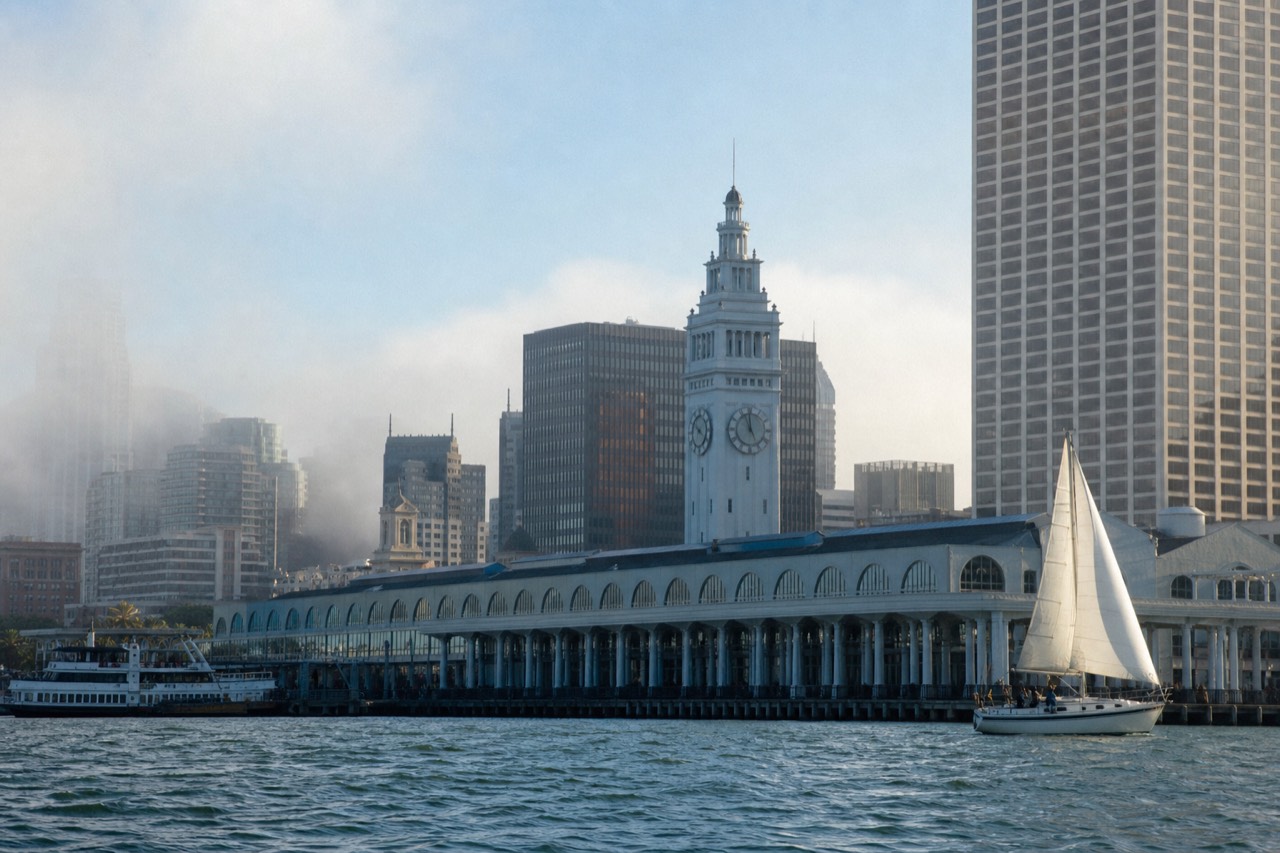
The Golden Gate Ferry crosses from the Ferry Building to Angel Island in about 30 minutes, with several daily departures, typically four or more, weighted toward late morning and midday. The Tiburon ferry is a shorter 10 to 15 minute hop with its own timetable. Both run more often in summer and on weekends. Because the island sells nothing, buy the round trip and note the last boat back before you wander far.
Timing is where a good island day is made or lost. The crossings themselves are short, roughly half an hour from the city and a quick skip from Tiburon, but the schedules are thinner than a bus line and the last boat back is a hard deadline. Miss it and there is no cafe, no ticket window and no easy way off. The sensible move is to check the return times the moment you land and set an alarm for the second-to-last boat, not the last.
Departures cluster in the morning and midday so that day trippers get a full island afternoon, then taper off. Weekends and the summer season add sailings; winter weekdays thin them right down, and weather can trim the timetable further. The schedules shift seasonally, so confirm the day you plan to go rather than trusting a printout, and give yourself a buffer at both ends for the walk between the dock and whatever you came to see.
| Detail | Golden Gate Ferry (from SF) | Tiburon ferry (from Marin) |
|---|---|---|
| Crossing time | About 30 minutes | About 10 to 15 minutes |
| Daily departures | Several, typically 4 or more | Several, seasonal |
| Busiest season | Summer and weekends | Summer and weekends |
| Ticket type | One-way or round trip, park fee included | Round trip only, park fee included |
| Buy return ahead? | Yes, nothing sold on the island | Yes, nothing sold on the island |
What can you do once you land on Angel Island?
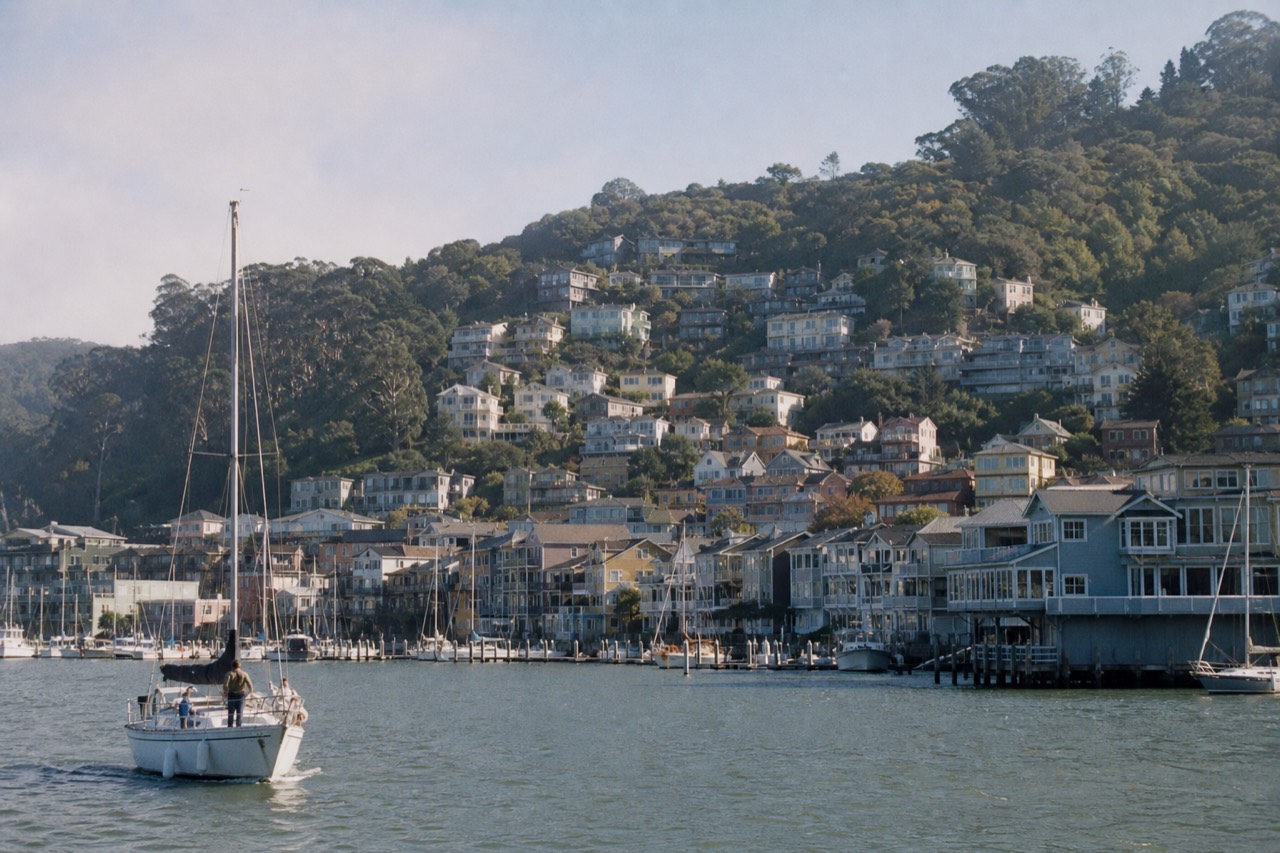
Angel Island is a full state park, not a quick photo stop. A flat perimeter road of about five miles rings the island for walkers and cyclists, the U.S. Immigration Station museum tells the story of arrivals processed here, and the climb to Mount Livermore, the island's high point near 788 feet, opens a 360-degree view of the bay. There is a tram tour, picnic lawns, kayak and bike rental in season, and a handful of environmental campsites for those who book ahead.
This is the part that surprises first-timers: there is enough on Angel Island to fill a whole day. The perimeter road is the spine, a mostly level loop you can walk in a couple of hours or ride far quicker, with the city, the bridge and Alcatraz swinging past on one side and the Marin hills on the other. Bring or rent a bike and the island opens up fast, since the flat road makes for easy family riding away from any traffic.
The Immigration Station on the northeast shore is the reason many people come, the place where hundreds of thousands of immigrants, mostly from Asia, were held and questioned in the early twentieth century, its barracks walls still carved with their poetry. For legs and a view, the trails up to Mount Livermore reward the climb with an unbroken panorama that no boat deck can match, the whole bay laid out below. If your day is short, the open-air tram tour loops the island with commentary and saves the walking.
| On the island | Time it takes | Good to know |
|---|---|---|
| Perimeter road loop (walk) | 2 to 3 hours | Flat, about 5 miles, stroller-friendly in parts |
| Perimeter road loop (bike) | 1 to 1.5 hours | Rent on the island in season or bring your own |
| Immigration Station museum | 1 to 2 hours | Historic barracks, carved poetry on the walls |
| Mount Livermore summit hike | 2 to 3 hours round trip | High point near 788 ft, full bay panorama |
| Tram tour | About 1 hour | Narrated loop, saves the walking |
| Environmental campsites | Overnight | Limited, reserve well ahead |
How does a bay sail pair with an Angel Island day?
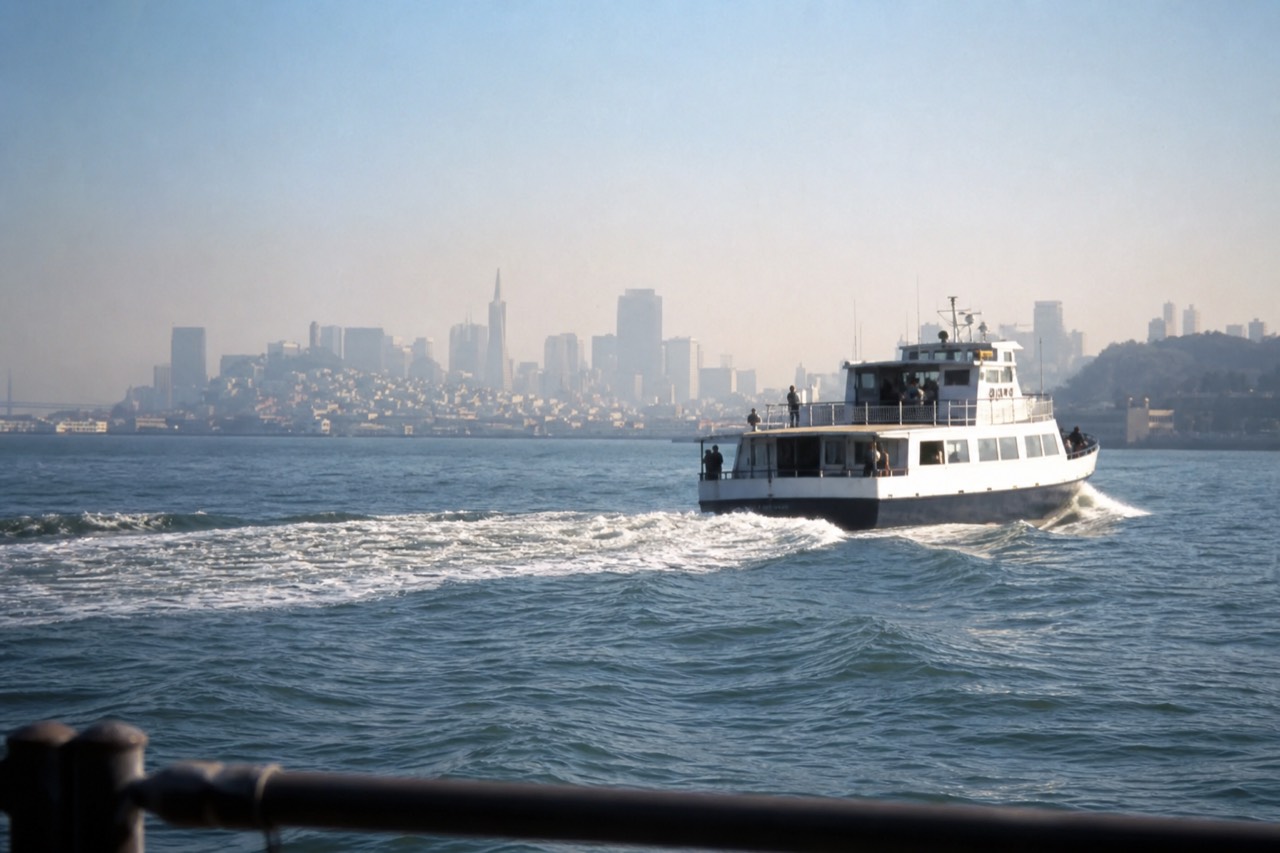
A ferry lands you on the island; a bay cruise or a sail shows you the island, the bridge, Alcatraz and the skyline from the water. They complement rather than compete. Sailing cruises that range toward Raccoon Strait pass closest to Angel Island, while the short narrated hour keeps to the bridge and Alcatraz with the island on the northern horizon. Do the ferry for the hiking and the museum, add a cruise for the wider bay from a deck.
Here is where our side of the bay comes in. None of our cruises land on Angel Island, and we are straight about that: the ferry is the only boat ashore. What a cruise gives you instead is the island in its full context, seen from the water alongside every other landmark, on a boat built for the view rather than for transit. A common and genuinely good bay day is a morning ferry to the island for the walk and the history, then an afternoon or evening sail to take in the whole bay from the deck.
The related pick for this guide leans into that evening angle. The two-hour sunset sailing experience with Sailing SF Bay is a small-group sail, engine off much of the way, that carries you out past the island and under the light as the city starts to glow, priced around $149 and rated 4.7 across 17 reviews. It is the sail for a special evening rather than a budget hour, and you can see the sailing dates and the live price on its page. This kind of clear, side-by-side comparison is what San Francisco Bay Cruises keeps current across every bookable trip.
For a cheaper, shorter way to take in the bay from the water, the classic narrated hour is the value floor. The Blue & Gold SF Bay Sightseeing Cruise leaves Pier 39 at $39, rated 4.6 across 1,562 reviews, and runs a 60-minute loop under the Golden Gate and past Alcatraz with the island in view to the north. It is the easy add-on to an island day when the budget is tight and the schedule is loose, since it rarely sells out.
If the appeal of the island is really the feel of being out on the water under wind, a day sailing catamaran gets you closest to that, and closest to Angel Island itself. The SF Bay Sailing Cruise on Adventure Cat is a 1.5-hour sail from Pier 39 at $65, rated a high 4.9 across 660 reviews, that heels to the breeze and ranges wider than the motor loop. When you want the sail rather than the commentary, you can check the current price and the sailing times before you pick a date.
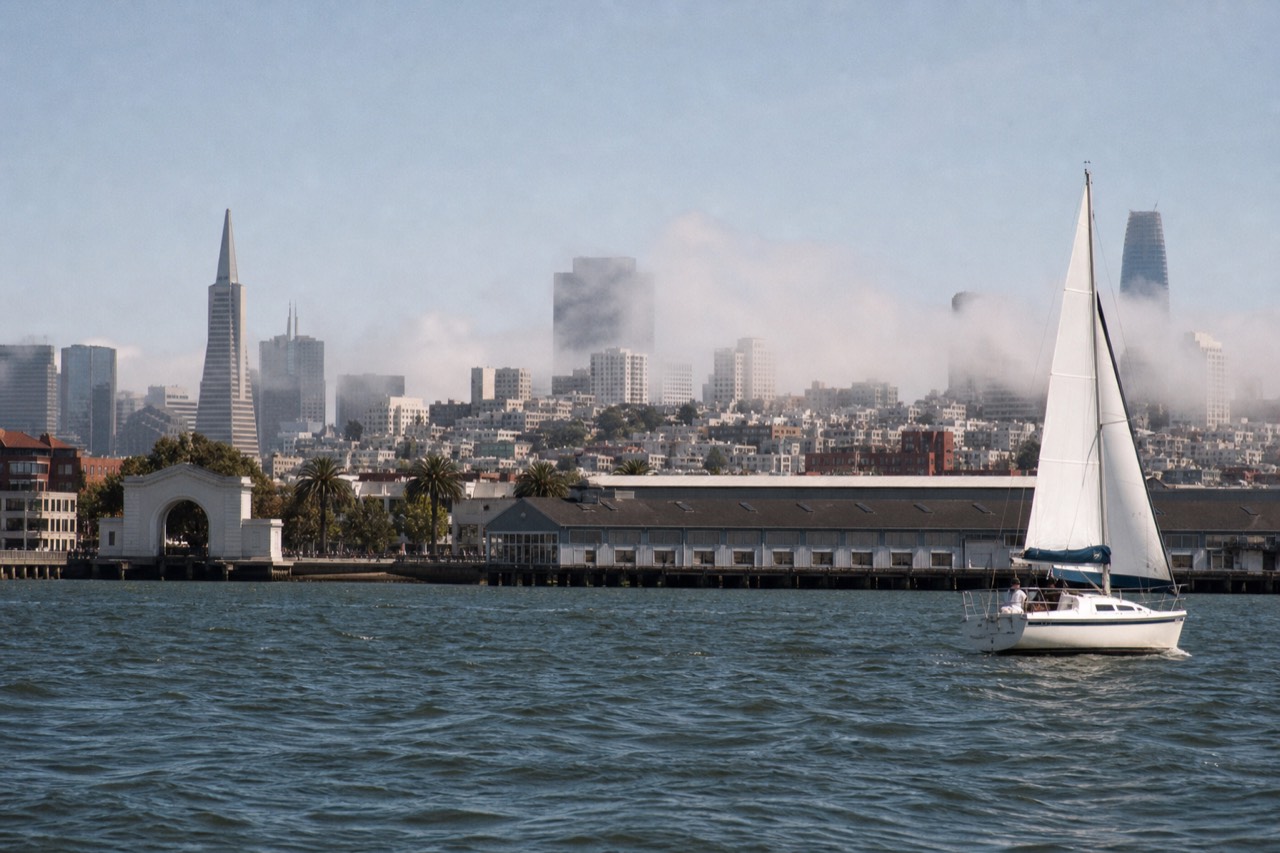
Ferry to land, or cruise to see: which do you actually want?
Pick the ferry when the point is the island itself: hiking the loop, the Immigration Station, the summit, a picnic, a bike ride, a whole slow day ashore. Pick a cruise when the point is the water and the wider bay: the bridge up close, Alcatraz, the skyline and the island seen from a deck in one trip. The ferry is cheaper and lands you; the cruise costs more and shows you more. Many visitors do both across a day.
The honest way to choose is by what you want to be doing, not by which boat looked nicer online. If you picture yourself walking a coast path with the city across the water, packing a lunch, reading the poems carved into old barracks walls, that is a ferry day and the cruise is a distraction. If you picture yourself on a deck with the Golden Gate filling the sky and a narrator naming what slides past, that is a cruise, and the ferry will feel like a commute.
Budget nudges the call too. The ferry is the cheaper boat by a wide margin and folds in the park fee, so a family day on the island runs light. A cruise costs more because it is built and crewed for the view, from the $39 narrated hour up to a crewed sunset sail. Neither is better value in the abstract; they buy different days. For the full menu of what floats on the bay, our overview of every kind of boat tour maps the options, and our decision framework for picking a cruise crosses budget against time and intent.
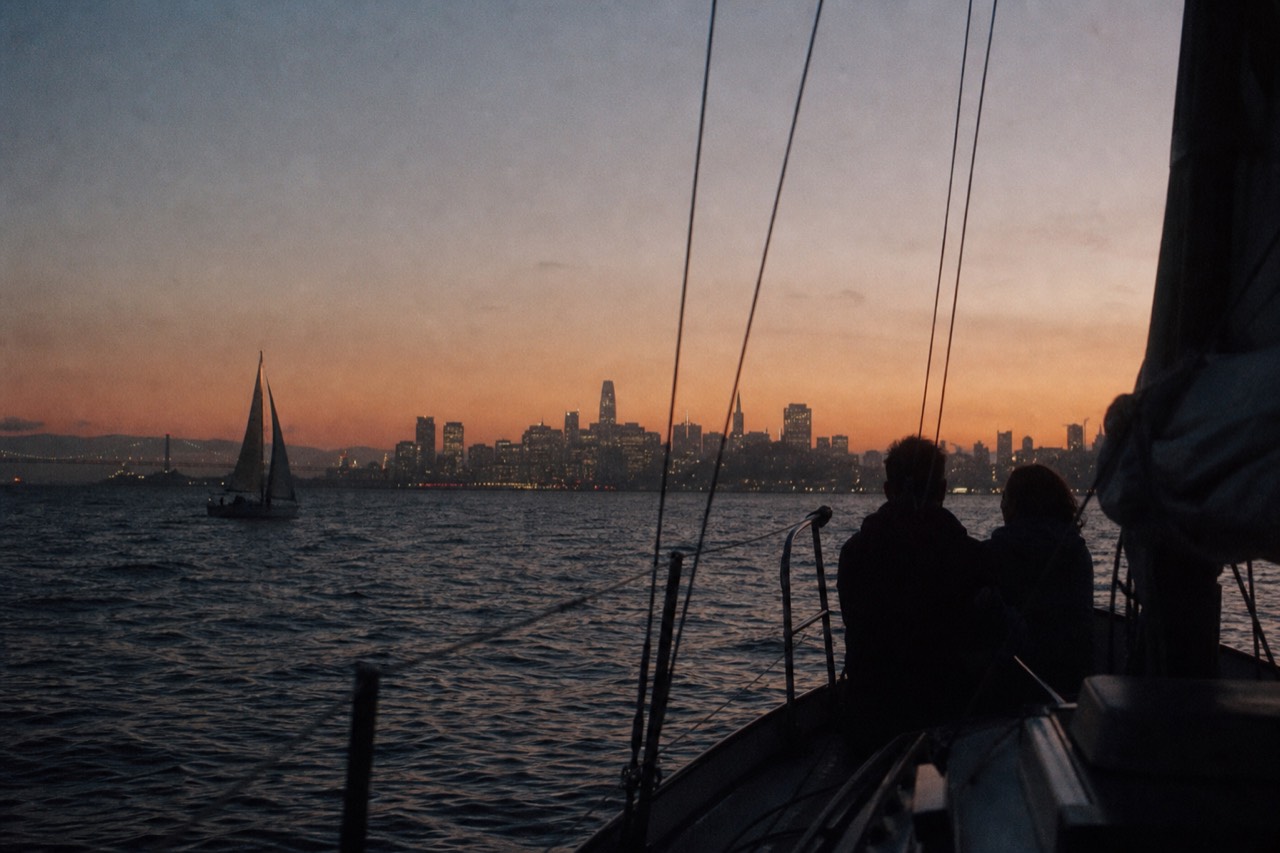
| Angel Island ferry | Bay cruise or sail | |
|---|---|---|
| What it does | Lands you on the island | Passes the island, shows the wider bay |
| Best for | Hiking, history, biking, picnics | Bridge close up, Alcatraz, skyline, the sail |
| From price | ~$10 Clipper to $15.50 paper one-way | $39 narrated hour up to $149 sunset sail |
| Time | Half to full day ashore | 60 min to 2 hours afloat |
| Park fee | Included in the fare | Not applicable |
| Books out? | Rarely, but check the last boat | Cruises rarely sell out; sunset sails book ahead |
When should you go, and what should you plan for?
September and October are the clearest, warmest, calmest weeks on the bay, with only four to five foggy days a month, so island views and cruise decks both pay off then. July is the foggiest month, when the marine layer can hide the bridge from the summit. Dress in layers year-round, since the water and the exposed island run cool and windy even in summer. Buy the ferry round trip, and reserve a sunset sail one to two weeks ahead.
The season decides your view more than any ticket does. Early fall is the reward window across the whole bay: minimal fog, warm land air with highs often in the low-to-mid 70s, and calmer water than the summer peak, which means a clear panorama from Mount Livermore and a clear bridge from a cruise deck. Summer brings the latest light but the thickest fog, especially mornings and evenings, and it can gray out the very views you climbed for. Spring is variable and breezy.
On-deck and on-island cold catches people out in every month. The bay air and water run cooler than the land because of the marine wind, so afternoons feel notably chillier out on the water and up on the exposed island than they do in the city, with late-summer bay water around 57°F and winds often 10 to 20 knots through the Gate. Bring a windproof layer, long sleeves and a hat whatever your phone says. Pack water and food for the island, since it sells neither, and if you are driving in to catch a cruise afterward, the Pier 39 garage runs around $10 to $12 an hour, which you can confirm on the Pier 39 parking page.
If you would rather skip the drive and walk to the Wharf-side boats, a room a couple of minutes from Pier 39 makes an early ferry morning painless.
Hotel Riu Plaza Fisherman's Wharf Check rates ›
| Season | Fog and clarity | On-water and island feel | Plan for |
|---|---|---|---|
| Jun to Aug | Foggiest, July the worst | Windy afternoons, 10-20+ knots | Layers, a midday slot, expect a hidden bridge some mornings |
| Sep to Oct | Clearest, 4-5 foggy days a month | Calmer, warmest air | The best summit and deck views of the year |
| Nov to Feb | Mixed, cooler and clearer than summer | Cold and exposed, early sunsets | Warm layers, shorter ferry timetables |
| Mar to May | Variable, wind building | Breezy, fog returning late | Flexible dates, a windproof jacket |
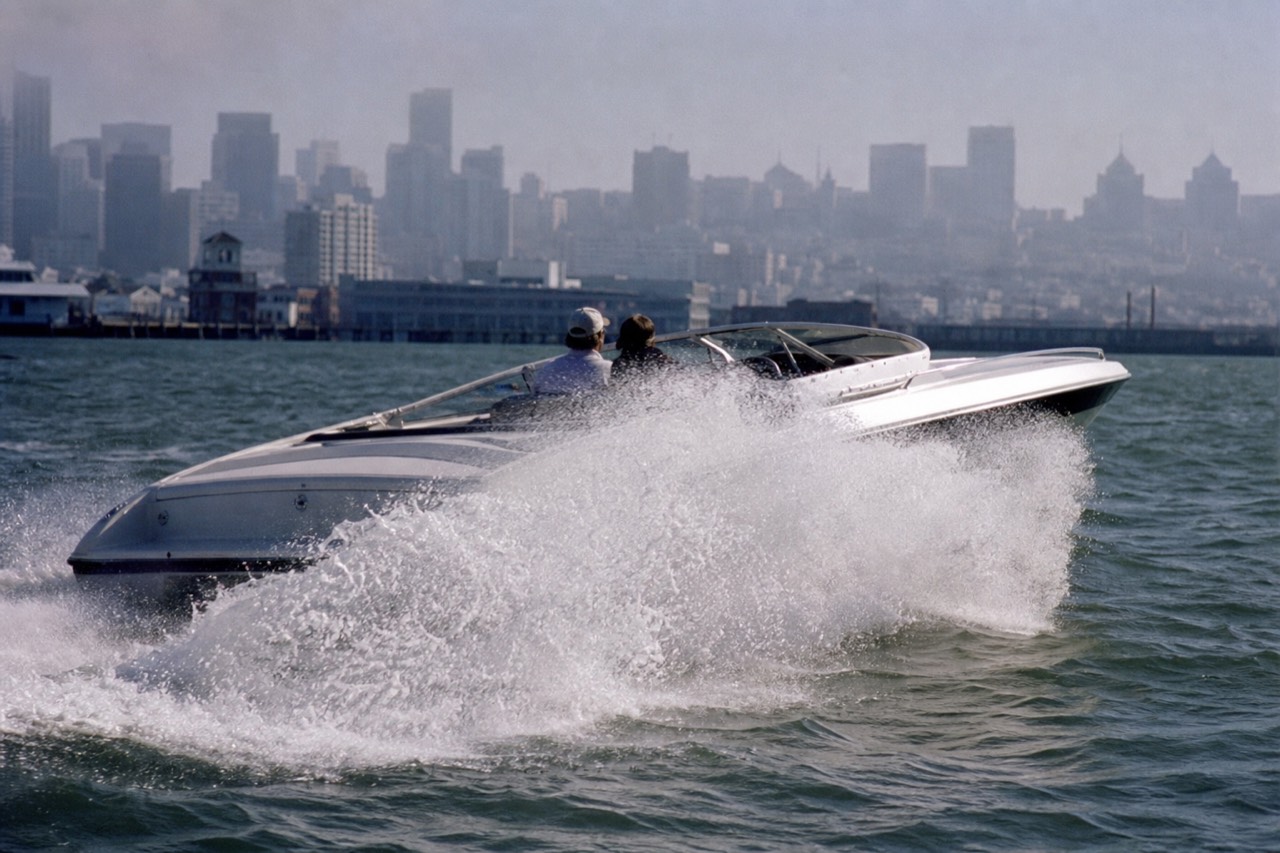
A clean two-part day works well in the clear months: an early ferry across for the loop road, the museum and the climb, then back to the city for a late-afternoon or sunset sail that takes in the island, the bridge and the skyline from the water. For the ferry that is genuinely a public crossing rather than a tour, our look at ferry fares from the city to Sausalito covers the neighboring route, and the golden-hour and city-lights sailings lay out the evening cruise options in full. For an evening on the water after an island afternoon, these three cover the range from a value loop to a real sail.
Frequently asked questions
How do you get to Angel Island?
By ferry only. The Golden Gate Ferry runs from the San Francisco Ferry Building in about 30 minutes, and a separate private ferry runs the short hop from downtown Tiburon in Marin. Both fold the state park fee into the ticket and both take round trips, since nothing is sold on the island. Sightseeing bay cruises pass the island from the water but do not land.
How much is the ferry to Angel Island?
From San Francisco, the Golden Gate Ferry is about $15.50 paper one-way for an adult or $10.00 with Clipper or contactless, youth and seniors $8.00, and children four and under free, park fee included, as of July 1, 2026. The Tiburon ferry sells round-trip fares in roughly the $15 to $18 range. Buy the round trip, since the island sells no tickets.
Can a bay cruise take you to Angel Island?
No. Sightseeing and sailing cruises pass or sail near the island from the water but never dock there, so a cruise cannot land you on Angel Island. Only the ferries land. A cruise is for seeing the island, the bridge, Alcatraz and the skyline from a deck; the ferry is for walking, biking and touring the island itself. Many visitors do both across one day.
How long do you need on Angel Island?
Plan a half to full day. The flat perimeter road takes two to three hours on foot or about an hour by bike, the Immigration Station museum adds one to two hours, and the Mount Livermore summit hike is a two to three hour round trip. A tram tour covers the island in about an hour if your time is short. Always check the last ferry back before you set off.
When is the best time to visit Angel Island?
September and October are the clearest and warmest weeks, with only four to five foggy days a month, so the summit panorama and any cruise deck both pay off. July is the foggiest month. Dress in layers whatever the season, since the exposed island and the open water run cool and windy, and pack your own food and water because the island sells neither.
Is Angel Island worth visiting over Alcatraz?
They are different trips. Alcatraz is a timed, sells-out-weeks-ahead landing built around the old prison. Angel Island is a larger, greener state park you can roam freely all day, with hiking, biking, history and picnics, on a ferry that rarely sells out. If you want an outdoor day with big bay views, Angel Island rewards it; if the prison is the draw, that is Alcatraz. Both are worth a day.
San Francisco Bay Sailing Cruise
Ferries run to a timetable and sails run to the wind, and September gives you both at their best. Check the sailing cruise's dates for your island window before the ferry schedule decides your whole day.
1.5 hours · English commentary or crew
Scheduled departure dates from the operator's listing. Availability and the final price are confirmed when you book.
None of these trips matches that choice. Adjust your preference or reset to the general recommendation.
Match Your Trip And Compare Costs
- Sail past it with the bridge
- 90-minute catamaran sail, 4.9 across 664 reviews. 1.5 hours. Free cancellation up to 24 hours before departure (listing terms).
- A small-group evening sail
- Two hours under canvas toward the island and the Gate. 2 hours. Check the cancellation window on the booking page before you commit.
- The classic motor hour
- The $39 loop with Angel Island on the far side of Alcatraz. 1 hour · Pier 43½, Fisherman's Wharf. Check the cancellation window on the booking page before you commit.
Before booking
Free cancellation up to 24 hours before departure (listing terms).
Compare complete party totals in the same currency, counting everything the day would otherwise cost.